
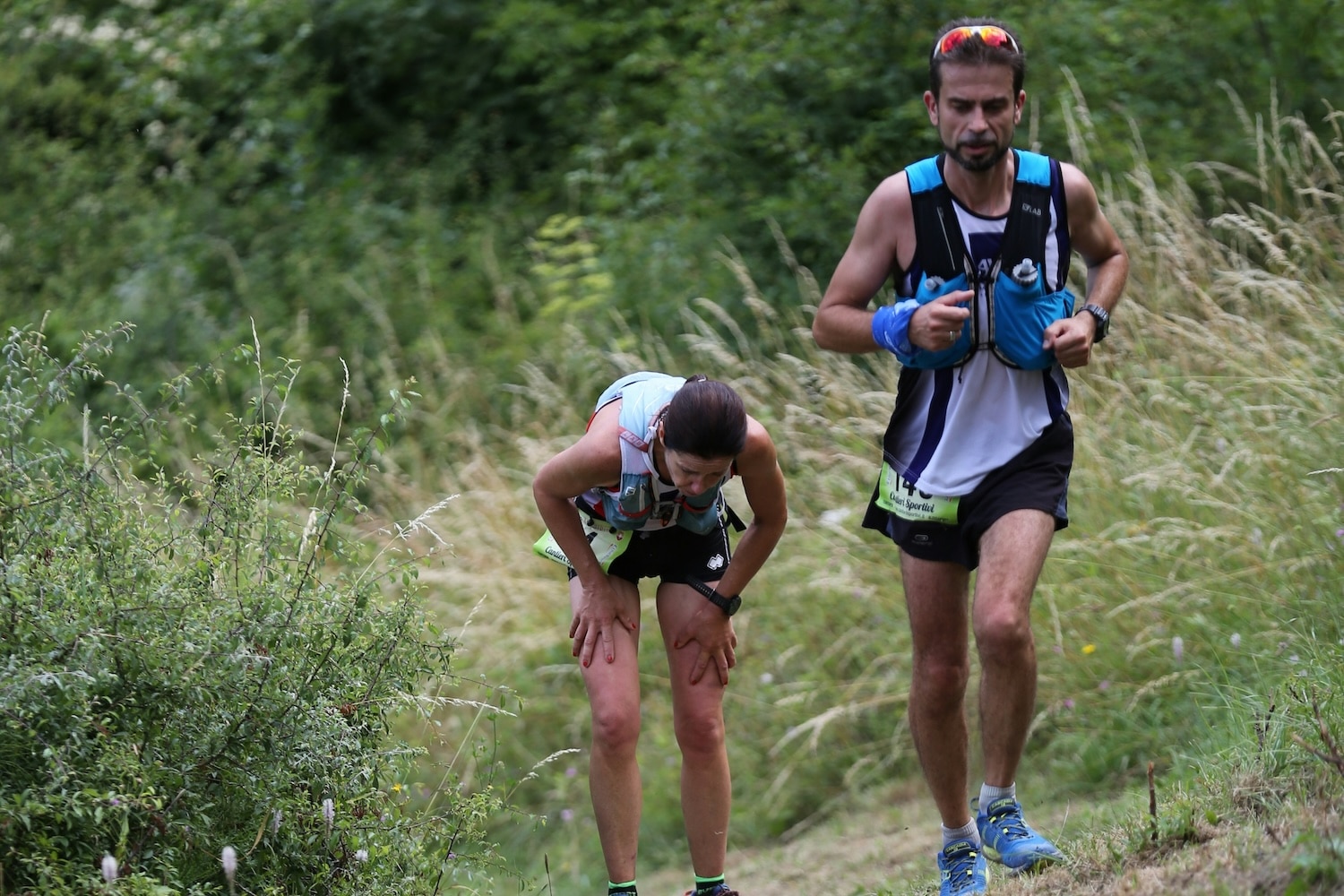
Ever seen it happen or experienced it yourself—that point in an ultra when a runner starts to run out of power? Ever wondered why that slowdown happens, why runners fade in trail ultras?
This is the first post in a three-part series that digs into exactly what’s going on and what to do about it.
Runners typically start a race strong. But as the race goes on, many athletes slow down dramatically. Pace drops, stride deteriorates, and then finishing the race turns into a massive grind. Maybe the athlete simply wasn’t fit enough—the reality is usually more complex.
In many cases, runners fade not because they lack fitness, but because their physiology shifts significantly as fatigue builds up. The ability to maintain performance deep into an ultra depends on more than just “fresh state” fitness; it depends on a runner’s durabilityDurability refers to the time course and magnitude of deterioration in an athlete’s physiological, mechanical, and performance-related characteristics… More, a relatively new construct in exercise science.
What “Fading” Actually Looks Like
In long trail races, fading rarely happens suddenly. It usually appears gradually as fatigue increases. At first, the athlete may notice that the same pace requires slightly more effort. Heart rate may drift upward, or breathing becomes a little heavier. Over time, these small changes accumulate.
Several physiological shifts typically occur during prolonged endurance exercise:
- Running economy often worsens.
- Heart rate may rise despite maintaining the same pace.
- Stride mechanics become less efficient, often characterized by increased ground contact time and a shorter aerial time.
- Muscle force production declines as neuromuscular fatigue sets in.
None of these changes alone may be dramatic. But together, they significantly increase the strain on the body. Eventually, maintaining the original pace becomes impossible. This progressive deterioration across multiple systems (cardiovascular, musculoskeletal, and neuromuscular) is why runners fade in trail ultras.

Why Fitness Tests Don’t Tell the Whole Story
Traditional endurance physiology focuses on three key variables, often called the Big Three predictors of performance:
- VO2max (maximal oxygen uptake)
- Lactate threshold (the point where blood lactate rises exponentially)
- Running economy (oxygen cost of running)
These metrics are useful, but they only tell part of the story and share a critical limitation: they are almost always measured when the athlete is fresh. Laboratory testing usually happens before significant fatigue sets in. As a result, these measurements reflect an athlete’s maximum physiological ability under ideal conditions.
But ultramarathons are the opposite of ideal. During long races, athletes spend hours operating in a fatigued state where physiology is constantly shifting. The numbers measured in a lab may no longer accurately describe what the athlete can actually sustain in the tenth hour of a race. This gap between “fresh” physiology and “fatigued” physiology is where durability becomes the deciding factor.
The Concept of Durability
Durability describes the capacity to maintain endurance performance during long races and prolonged, submaximal exercise. It is a time-dependent metric. In simple terms, durability describes how well the body holds up over the course of a long race.
In modern thinking, durability is considered the fourth pillar of performance in exercise physiology, alongside VO2max, lactate threshold, and running economy.
Athletes with greater durability experience less physiological deterioration over time. This allows them to utilize a higher percentage of their theoretical potential deep into the race, whereas a less durable athlete sees their effective “ceiling” drop as the event progresses.
One way to observe this in real time is through decoupling. This happens when pace or power stays constant or even drops, while heart rate keeps rising. As fatigue builds, the body has to work harder to produce the same output. This increasing physiological cost is often reflected by heart rate drift and signals the point at which efficiency starts to decline during a race.

Why Durability Matters in Trail Ultras
Durability plays a role in all endurance sports, but it is especially critical in trail running due to several unique stressors:
- Large elevation changes and technical terrain disrupt rhythm.
- Significant downhill running, causing substantial eccentric muscle damage.
- Variable terrain alters energy demands and can accelerate metabolic fatigue and glycogen depletion.
Downhill running is particularly punishing. It induces microdamage in muscle fibers, leading to inflammation and a reduced ability to produce force.
As the musculoskeletal system becomes compromised and fatigue increases, the energy cost of running rises. This is a key reason why runners fade in trail ultras more than in road races despite impressive lab metrics. Often, those with slightly lower metrics but higher durability perform surprisingly well.
How Training Influences Durability
While durability has only recently gained scientific attention, experienced coaches have intuitively trained for it for decades. Strategies like fatigue stacking, back-to-back long runs, and specific terrain exposure help condition the musculoskeletal system to maintain stable movement patterns and aerobic efficiency,even as fatigue inevitably builds up.
Why This Matters for Coaches
Improving peak physiological capacity is important, but in trail ultras, it’s rarely the deciding factor. In these demanding races, success is often determined by how much of that capacity athletes can maintain after long hours on their feet.
The athlete who slows down the least frequently performs the best. Recognizing this helps coaches design training programs that prepare athletes not only for the start of a race but also for the final miles when fatigue becomes the biggest challenge.
Summary
Many runners fade in trail ultras despite appearing well-prepared at the start. Traditional fitness metrics describe an athlete’s capacity when fresh, but durabilityDurability refers to the time course and magnitude of deterioration in an athlete’s physiological, mechanical, and performance-related characteristics… More describes the ability to maintain that performance as fatigue accumulates.
Understanding durability provides a practical framework for explaining why runners fade in trail ultras—and how to prevent it.
In the next article in this series, we will explore how coaches can use training data to identify the “smoking gun” of fading in their athletes and discuss specific programming strategies to build a more durable runner.
A version of this article was originally published by UESCA.
_____________
Cover photo by Massimo Sartirana on Unsplash.
References
Coyle, E. F., & González-Alonso, J. (2001). Cardiovascular drift during prolonged exercise: New perspectives. Journal of Applied Physiology, 90(1), 348–359. https://doi.org/10.1152/jappl.2001.90.1.348
Hunter, B., Maunder, E., Jones, A. M., Gallo, G., & Muniz-Pumares, D. (2025). DurabilityDurability refers to the time course and magnitude of deterioration in an athlete’s physiological, mechanical, and performance-related characteristics… More as an index of endurance performance: Methodological considerations. Experimental Physiology, 110(11), 1612–1624. https://pmc.ncbi.nlm.nih.gov/articles/PMC12576026/
Maunder, E., Seiler, S., Mildenhall, M. J., Kilding, A. E., & Plews, D. J. (2021). The importance of “durability” in the physiological profiling of endurance athletes. Sports Medicine, 51(8), 1619–1628. https://doi.org/10.1007/s40279-021-01459-0
Morin, J. B., Tomazin, K., Edouard, P., & Millet, G. Y. (2011). Changes in running mechanics and spring–mass behavior induced by a mountain ultra-marathon race. Journal of Biomechanics, 44(6), 1104–1107. https://doi.org/10.1016/j.jbiomech.2011.01.028