
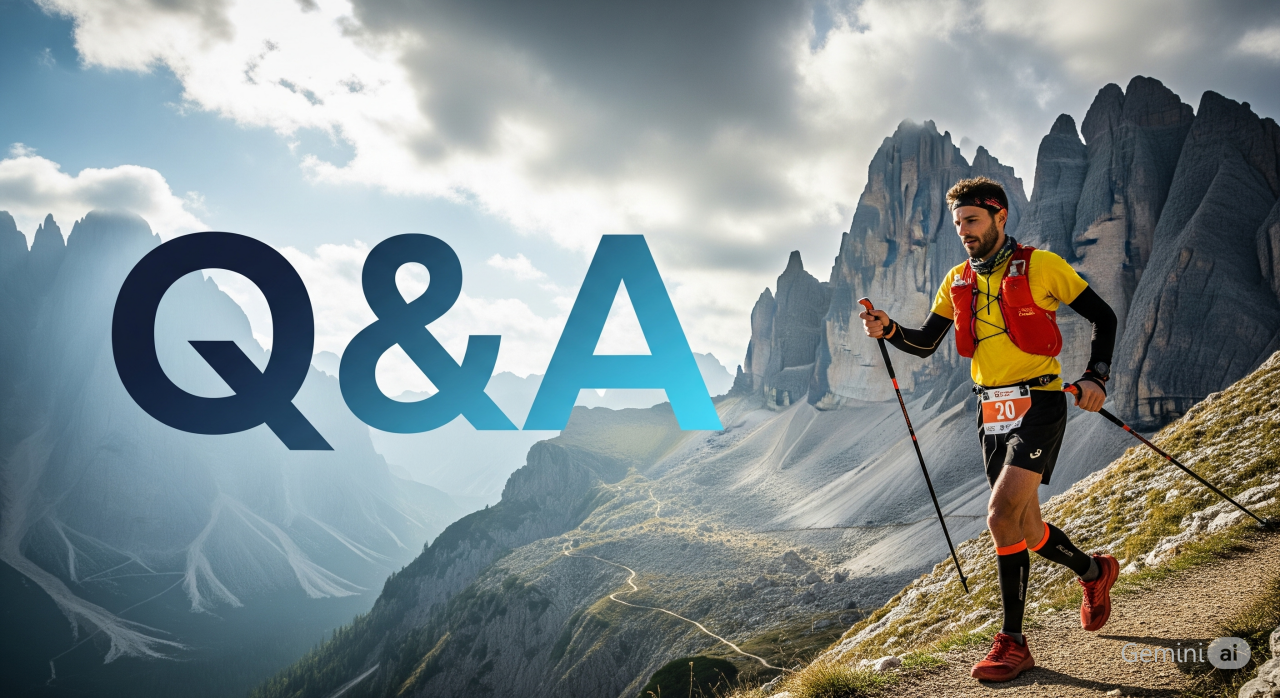
Should I use poles for distances over 50K?
I often get similar questions from runners and online. Folks seem a bit lost when it comes to deciding whether to use poles in ultras or trail races in general. Let’s try to clarify some of the confusion.
Whether to use poles depends more on the course’s elevation profile and terrain than the race distance. Poles are generally recommended for courses with multiple and lengthy steep climbs and descents on rugged terrain. Poles don’t really help much on flat or rolling courses.
The Concept of Pole Use
First off, let’s explore the concept behind the use of poles. Why use poles at all, considering the extra weight?
Poles are all about sharing the load. They help you shift some of the work from your legs to your upper body—arms and core. By sharing the muscular effort between the upper and lower body, you reduce the strain on your leg muscles, especially crucial when going downhill.
Poles are super helpful on demanding, technical courses, offering an extra push uphill and critical support when going downhill, where impact forces are highest. Ultimately, using poles helps you move faster, feel more stable, and significantly delay fatigue—a definite advantage that offsets the slight reduction in economy caused by the additional weight.
Poles don’t really help much on flat or rolling courses, as they can get in the way and add unnecessary weight.
Remember, the use of poles is always a personal choice—there’s no right or wrong answer here.
Poles as Performance Boosters
Using poles can really change your game in races with long, tough climbs and quad-busting descents. Think of mountain ultras, sky races, or any technical course with a considerable amount of vertical change, regardless of race distance.
- Enhanced Climbing Speed: On steep climbs that might otherwise reduce your pace to a crawl, poles can provide both stability and an invaluable extra push. By “poling” your way up, you actively engage your upper body and arms to generate additional forward momentum. This allows you to maintain a faster, more consistent pace than relying on leg power alone.
- Reduced Leg Strain & Fatigue: On brutal downhills, poles are invaluable for sharing the load between your upper and lower body, absorbing some of the strong impact forces that would otherwise pound your legs. This delays the onset of fatigue, especially in your quads. Your quads act as crucial shock absorbers and endure high eccentric loading during descents, leading to micro-tears in the muscle tissue, which is often the primary cause of early fatigue and debilitating post-race soreness. Furthermore, poles enhance stability on downhills, allowing you to move faster and with greater confidence.
- Enhanced Stability: On treacherous, uneven, or slippery terrain, poles give you two extra points of contact with the ground. This significantly boosts your balance and drastically reduces the risk of falls—a huge benefit, especially when fatigue sets in during the later stages of a race.

Poles as a Burden
On the flip side, poles are probably more of a hindrance than they’re worth on runnable courses or courses with minimal elevation changes, like a virtually flat 100-miler or a fast, rolling forest course.
- The Weight Penalty: Even the lightest carbon fiber poles add weight that you have to carry, deploy, and stow. While seemingly small, this extra weight undeniably reduces your running economy. You’ll expend more energy to maintain the same pace, and over the course of an ultra, this accumulates, leading to earlier fatigue and potentially slower overall times. Therefore, on runnable terrain where their benefits are negligible, poles become a hindrance.
- Logistical Annoyance: Constantly having to pull out your poles for a small rise, then collapse and stow them for a runnable section, can be a frustrating exercise that breaks your rhythm and concentration.

Flat and Fast
Let’s look at two examples of “flat and fast” 100-mile (160 km) trail races where poles would definitely provide a disadvantage.
- The 2025 Mamba 100 Miler is a Western States qualifier, featuring a mostly single-track course. The International Trail Running Association (ITRAThe International Trail Running Association (ITRA) represents all parties involved in trail running (i.e., runners and race organizers)…. More) says it’s flat (no elevation change), and Running with Miles reports a small total gain of about 2,600 feet (792 meters) over the 100-mile course.
- The Hennepin Hundred is a 100-mile trail race, mostly on unpaved trails. The American Trail Running Association (ATRA) describes the race as “flat and fast,” meaning it’s super level.

Pole Practice
If you plan to use poles in a race, be sure to train with them and get plenty of practice beforehand. This will help you develop the necessary skills, as well as strength and stamina in your arms. You need to get comfortable with your poles before using them in a race. Mastering the right techniques will enable you to maximize their benefits and steer clear of any issues during the event.
Takeaway
Vert is your guide! The next time you’re wondering whether to grab your poles for a race, look past the distance and analyze the course’s elevation profile and terrain. If you’re facing plenty of steep, technical climbs and equally challenging descents, poles will most likely give you a significant advantage. Just remember to practice with them beforehand to build the necessary skills, arm strength, and stamina.
_____________
Cover image by Google Gemini AI.